Item added to your cart
  Worldwide shipping cost by courier from 15,00 €
  Download PDF
 Product added to the wish list!
 Add to wishlist
 Ask a question




 COMPARE WITH OTHER ITEMS
GO TO THE COMPARISON
COMPARE WITH OTHER ITEMS
GO TO THE COMPARISON
Made in England (made in 2026)
Free gift wrapping is included
ALFRED DUNHILL: THE NOTTING HILL FACTORIES (1916 – 1946)
The burgeoning demand for Alfred Dunhill’s esteemed pipes and tobacco products between 1910 and 1916 quickly outstripped the capacity of his existing pipe production facilities in Mason’s Yard (located diagonally opposite the Duke Street store) and the cigarette operation nestled in the cellar of the Duke Street shop.
True to his entrepreneurial spirit, Alfred Dunhill recognized the imperative for expansion. In 1916, he acquired a substantial factory building at 186 Campden Hill Road, London W8, strategically located at the Notting Hill Gate end, to consolidate his pipe and cigarette manufacturing. This facility encompassed a second building containing manufacturing and offices, now known as 182-184 Campden Hill Road; the two structures were ingeniously linked by an iron bridge spanning their third floors (today, the bridge no longer exists, but its original location is still clearly visible in the brickwork).
To further solidify his presence, offices, factories, and yards were also secured at 11 Uxbridge Street, just a few doors down from the main factory. By 1920, the wholesale showroom and export departments were relocated to 139-143 High Street, Notting Hill Gate. The following year, with the acquisition of the adjacent building at No. 137, the newly established lighter division was also seamlessly integrated.
Alfred Dunhill added a personal touch to this strategic centralization by relocating his family in 1916 to a grand six-story Regency terrace house at 8 Airlie Gardens—a mere short walk from the bustling factory. It is no exaggeration to assert that Notting Hill Gate had, during this period, become the vibrant, pulsating heart of the brand's manufacturing, administrative, and wholesaling operations.
Following the relocation of production to Plaistow in 1946, the Campden Hill Road building was converted into office spaces and, around 2001, reimagined as luxury residential units. A distinctive Blue Plaque (commemorative marker), affixed to the entrance of 1 Uxbridge Street, bears the inscription:
"THIS BUILDING WAS THE DUNHILL PIPE & CIGARETTE FACTORY 1916 – 1946"
LIMITED EDITION: THE "NOTTING HILL" PIPE
This beautiful "White Spot" pipe has been specifically created to celebrate the profound legacy of the Dunhill factory in Notting Hill Gate, which celebrates a dual anniversary this year: the 110th year since its opening in 1916 and the 80th year marking its closure in 1946.
Technical Features:
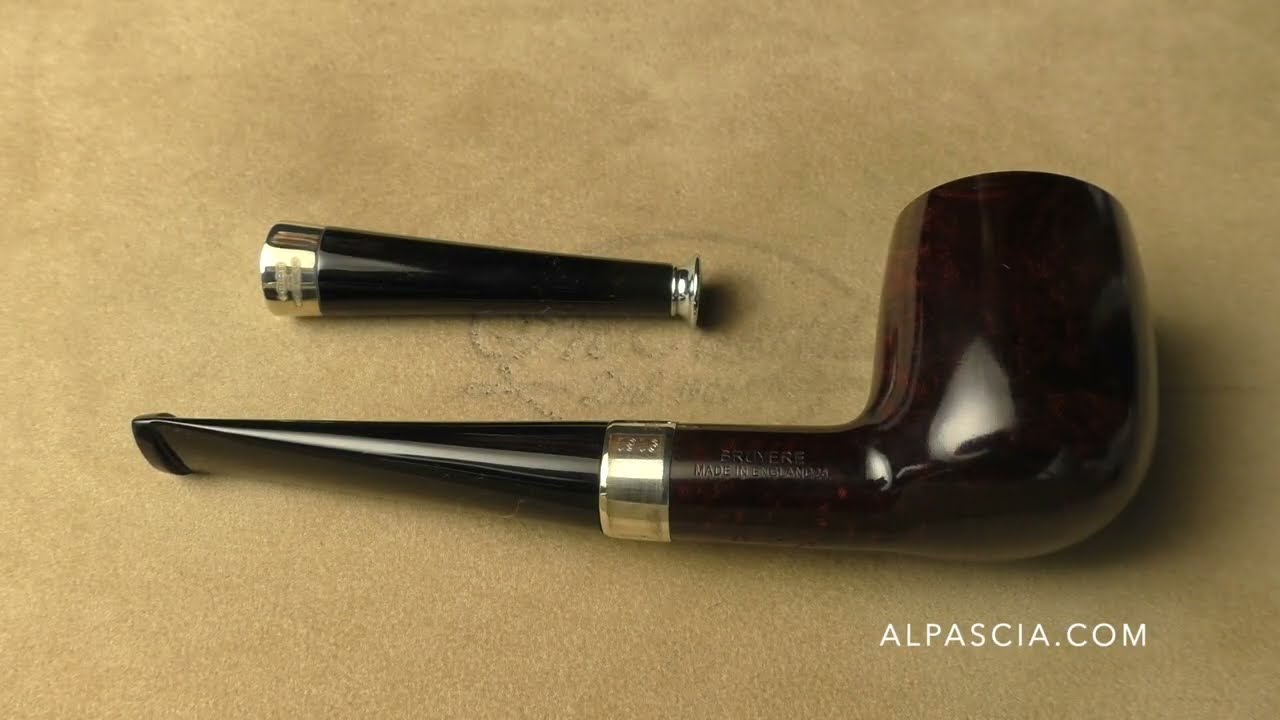
Model: An iconic, classic Billiard shape in group 5 (5103).
Mouthpiece: Hand-cut black Vulcanite (Ebonite).
Finish: A Sterling silver band engraved with "1916 Notting Hill Gate 1946".
Accessories: Each pipe is accompanied by a Vulcanite tamper, crowned with a Sterling silver cap featuring a raised reproduction of the famous Blue Plaque.
Packaging: Presented in a commemorative blue leather White Spot pouch embossed with the plaque and accompanied by a numbered, hand-signed limited edition certificate.
Limited Quantities for Worldwide Distribution:
66 pipes in the Bruyere finish.
Note: As per tradition, the No. 1 editions are not for sale and will be kept in the White Spot historical archive.


 Discover the full collection: view all Dunhill The White Spot pipes
 Dunhill History
 Dunhill Namiki